
The gap in sports practice between men and women has narrowed to a point according to the National Barometer of Sports Practices 2025. This tightening modifies the composition of audiences across all leisure slots, from organized activities to free practices. Local programming and providers that do not integrate this data miss out on a growing part of the demand.
Changing Sports Leisure: Trail, Urban Cycling, and Emerging Disciplines
Trail running continues to experience remarkable growth in France. The democratization of this discipline goes beyond the circle of seasoned runners: we are seeing a multiplication of short formats, accessible to occasional practitioners seeking a nature activity without heavy logistics.
Cycling as a mode of tourist discovery is progressing strongly in large urban areas. In Paris, visitors increasingly prefer two-wheelers to explore the city, leading to a constantly expanding offer of guided bike tours.
On the side of emerging disciplines this fall, several sports are gaining ground. Among the leisure activities offered by Veritaxis, we find this logic of diversification that reflects current trends in the sector.
- Padel continues its growth in suburban municipalities, with family slots and adult tournaments filling the schedules during the week.
- Gentle aquatic activities (beach walking, paddle yoga) attract a mixed audience, often seeking relaxation more than performance.
- Indoor climbing sports are becoming popular among children starting from school holidays, supported by facilities adapted for the youngest.
Holidays and Purchasing Power: How Families Are Reorganizing Their Activities
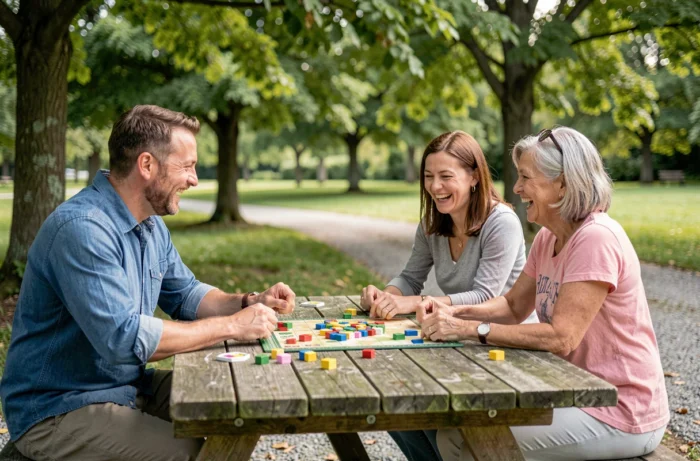
French people are reducing paid activities in favor of free excursions. Recent reports confirm the trend: an increase in picnics, a decrease in restaurant outings, a decline in jet skiing and high-priced services. Camping, particularly in mobile homes, is establishing itself as a structuring alternative.
Leisure sociologist Olivier Sirost describes the mobile home as a “substitute for a second home without a lifetime commitment.” This formula summarizes a profound shift in how families plan their holidays. The budget freed up from accommodation is reinvested in local activities: markets, hikes, beach games.
The rise of “excursionists” (day visits without accommodation) is a strong indicator. Municipalities close to living areas capture this flow provided they offer a clear program of activities, with free or moderately priced slots.
Municipal Activities and Accessible Leisure
Communities that structure a mixed summer offer (sports, cultural, relaxation) directly respond to this budget constraint. The model works when the program combines supervised activities for children in the morning and open meetings for all in the late afternoon.
We recommend not multiplying paid activities in the same slot. A schedule that alternates free play, free sports workshops, and one or two reduced-price activities per week retains families better throughout the school holidays.
Slow Tourism and Relaxation: What Adults Really Seek
Slow tourism is not just a marketing buzzword. In Dordogne and Landes, reports document a specific behavior: vacationers seek tranquility rather than an accumulation of activities. This “relaxation” positioning requires a calibrated offer, not an absence of offer.
Specifically, providers who are succeeding offer short formats (a maximum of half a day), in small groups, with a strong local anchoring. Nature walks, culinary workshops with local products, canoe outings at the pace of the current: the common denominator is deliberate slowness.
Active Relaxation vs. Passive Relaxation
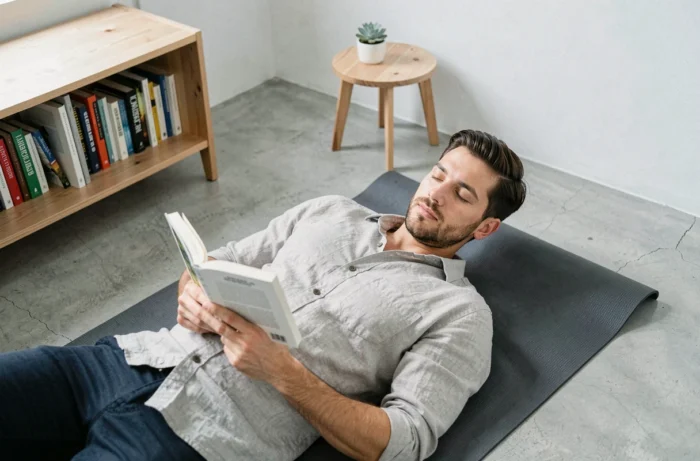
Active relaxation (walking, outdoor yoga, supervised swimming) is growing faster than passive relaxation. The 2025 barometer confirms that weekly sports practice has significantly increased since 2018, including among audiences who do not define themselves as “athletic.”
For leisure structures, the operational consequence is clear: program sessions accessible to all levels, without physical prerequisites, with a focus on well-being rather than performance. Vocabulary matters. “Discovery session” converts better than “sports initiation.”
Leisure Program: Criteria That Make a Difference for All Audiences
A leisure program that works for everyone (children, adults, families) relies on a few technical decisions often overlooked by mainstream articles.
- Time segmentation: children’s slots in the morning, mixed activities in early afternoon, adult formats in the evening. This division avoids conflicts of use on the equipment.
- Clarity of the schedule: a weekly program displayed, with age and level pictograms, reduces questions at the welcome point and increases participation rates.
- Alternating sports and culture: a 100% sports program fatigues families by the third day. Integrating a creative workshop or a heritage outing mid-week reignites engagement.
- Single pricing or partial free access: municipalities that offer free access to at least half of the activities see significantly higher attendance across the entire program.
The underlying trend has remained the same for several seasons: French people want varied leisure activities, close to home, and financially accessible. Structures that meet these three criteria simultaneously capture a loyal audience, even outside school holiday periods. The rest depends on local adjustments, municipality by municipality, according to available facilities and existing associative partnerships.