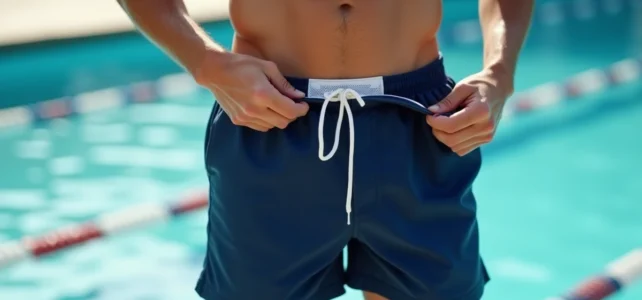
Every summer, the same scene unfolds at municipal pools: a swimmer is turned away at the entrance because their shorts do not meet the requirements of the internal regulations. Recognizing a suitable swimsuit before leaving home can prevent this disappointment. Several concrete, visible, and tactile clues can help you decide in just a few seconds.
Mesh lining and inner net: the first reflex to have
The most reliable gesture to identify a swimsuit is to turn the garment inside out. A swimsuit has a mesh lining sewn inside, which at least covers the crotch area. This lining serves two functions: it provides support similar to that of underwear and prevents the outer fabric from sticking to the skin once wet.
A pair of casual shorts, cotton bermuda shorts, or classic sports shorts do not have this lining. They may be lined at the waistband, but never throughout the lower part. This manufacturing detail is the quickest criterion to check, even in stores.
For those who want to delve deeper into the differences between classic shorts and swimsuits, it is possible to learn more on CC Rhin where the distinguishing criteria are detailed.
Synthetic material and quick-drying: what the fabric reveals
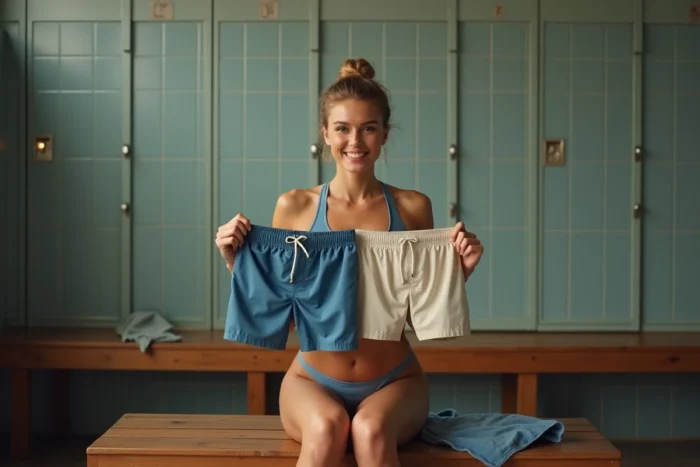
The second reliable clue lies in the fabric composition. A swimsuit designed for water is made from quick-drying synthetic material, usually polyester (sometimes recycled) or polyamide, often blended with elastane for stretchability.
Cotton, linen, or thick canvas shorts absorb water, take a long time to dry, and deform. French public pools regularly refuse these materials because they retain more residues (dust, fibers, laundry detergent) that could contaminate the pool water.
Read the composition label before leaving
The label sewn inside the waistband provides the answer in just a few seconds. Two simple indicators:
- If the composition indicates a majority of polyester or polyamide (with or without elastane), the shorts are designed for water and will dry quickly after swimming.
- If the composition mentions cotton, linen, or a blend containing more than half natural fibers, the garment is not a swimsuit, even if it visually resembles beach shorts.
- The mention “chlorine resistant” or “pool special” on the label or packaging removes any ambiguity. Manufacturers specializing in swimwear systematically indicate this.
Pockets, zippers, and closures: details that pools monitor
Beyond the fabric, the cut and finishing of the shorts determine whether they will be accepted in the pool. French public pools apply a common-sense rule: the fewer pockets and metal closures, the more likely the shorts will be allowed.
A “pool-compatible” swimsuit is recognized by its limited pockets (at most one back pocket, sometimes none), the absence of a metal zipper, and the lack of bulky gussets or flaps. These elements are considered likely to retain objects, dirt, or injure other swimmers.
Conversely, a long surfboard short with multiple cargo pockets and metal eyelets will often be refused in a municipal pool, even if it is technically a swimsuit. The regulations of each establishment may vary, but the general trend is the same: the more understated the shorts, the more likely they are to pass.
The drawstring, a often overlooked clue
A strong drawstring at the waist also distinguishes a real swimsuit from casual shorts with a simple elastic band. The drawstring allows for adjustment before a dive or swimming laps. An elastic band alone quickly stretches with repeated contact with chlorine, which poses problems for fit in the water.
Lifeguards regularly report that shorts without a drawstring slip during swimming movements. This is not a systematic reason for refusal, but it is a sign that the garment was not designed for the pool.
Swimsuit refused in the pool: length also comes into play
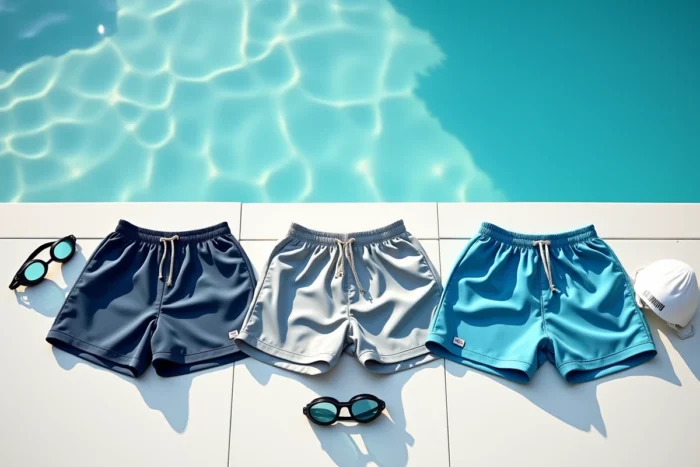
Some municipal pools impose a maximum length above the knee for men’s swimsuits. A swimsuit that falls below the knee resembles casual bermuda shorts, and pool staff may refuse it even if the fabric is suitable.
The logic behind this rule is twofold. On one hand, a long synthetic fabric short visually remains close to a casual garment, making entry checks more difficult. On the other hand, establishments consider that a short worn outside and then in the pool poses a higher hygiene risk than a short swimsuit dedicated solely to swimming.
Field reports vary on this point: some pools tolerate mid-thigh shorts without difficulty, while others require a fitted swimsuit type brief, boxer, or jammer. The only way to avoid an unpleasant surprise is to consult the internal regulations of the visited establishment, often posted online.
Quick check before leaving: criteria to tick off
Before slipping a pair of shorts into a pool bag, four checks are enough to know if they will pass the entry control:
- The mesh lining is present inside, at least in the crotch area.
- The label indicates a predominantly synthetic composition (polyester, polyamide, elastane).
- The pockets are minimized, without metal closures or gussets.
- The length does not exceed the knee, and a drawstring complements the waist elastic.
A pair of shorts that meets these four points has all the characteristics of a swimsuit designed for the pool. A pair that fails two or more is likely a casual or beach garment, suitable for the seaside but not for the regulations of a public pool. Keeping a dedicated swimsuit in your swim bag remains the simplest solution to never find yourself negotiating with a lifeguard at the pool entrance.