A properly segmented electrical panel, dedicated circuits by usage, and fine control of each consumption point: optimizing a home’s electricity relies less on repeated eco-actions and more on the very architecture of the installation. Here, we discuss the technical levers that truly transform comfort and the electricity bill.
Segment the electrical panel by usage to control each point
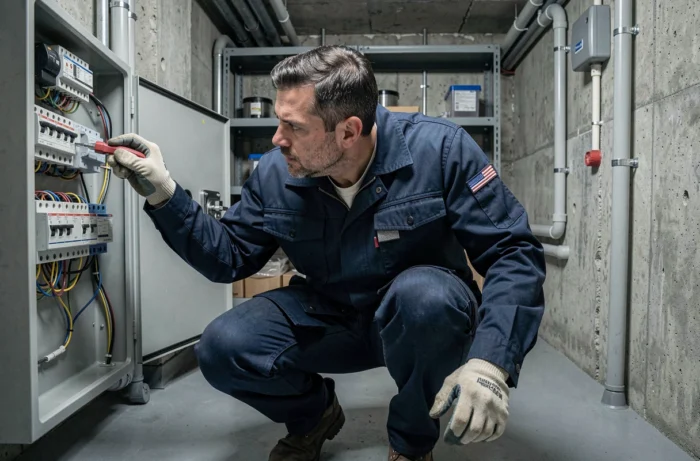
Most residential panels still group circuits by type (lighting, outlets) without distinction of area or usage. This organization makes precise control impossible. We recommend a functional breakdown: a dedicated circuit breaker for the water heater, another for the vehicle charging circuit if applicable, separate lines for heating by room.
This segmentation allows for cutting off or programming each point independently. It also facilitates diagnostics: a tripped differential immediately indicates the problematic area, without guesswork.
For homes where the installation dates back several decades, a partial rewiring of the panel is often sufficient. It is possible to discover Electriciret for the home to assess the necessary adaptations based on the existing configuration.
A technical point often overlooked: the calibration of circuit breakers must match the actual cross-section of the cables. A 20 A circuit breaker on a 1.5 mm² cable creates a risk of overheating without triggering the protection. Checking this cable/circuit breaker pairing is a prerequisite for any optimization.
Off-peak hours and subscribed power: two underutilized settings
Since August 1, 2026, the off-peak/full-peak option is available for subscriptions of 3 kVA, which changes the game for studios and small spaces. Before this date, only meters starting from 6 kVA had access. This change alters the economic equation of the electric water heater programmed during off-peak hours, even in a small dwelling.
The day/night contactor installed in the panel controls the automatic switching of the water heater during off-peak periods. Without this contactor, the tariff option is useless: the tank heats continuously, including during peak hours.
Check the consistency between subscribed power and load calls
An oversized subscription costs money for no reason. An undersized subscription causes cuts at the main circuit breaker. With a communicating meter, consumption data allows for identifying the actual power demand and adjusting the subscription accordingly.
- Check the maximum power reached over the last six months via the supplier’s customer area or directly on the meter
- Compare this value to the subscribed power: if the gap exceeds a complete tier (for example, 9 kVA subscribed for a maximum call of 5.8 kVA), switching to the lower tier reduces the fixed cost
- Anticipate seasonal uses: electric heating in winter generates peaks absent the rest of the year, which may justify maintaining a higher tier rather than experiencing disconnections
Room-by-room control of electric heating: a forthcoming regulatory obligation
Decree No. 2023-444 mandates a temperature regulation device in new housing starting January 2027, and in existing housing starting January 2030. In practice, each room will need to have an independent programming system. Waiting for the deadline means undergoing a constrained renovation instead of integrating it gradually.
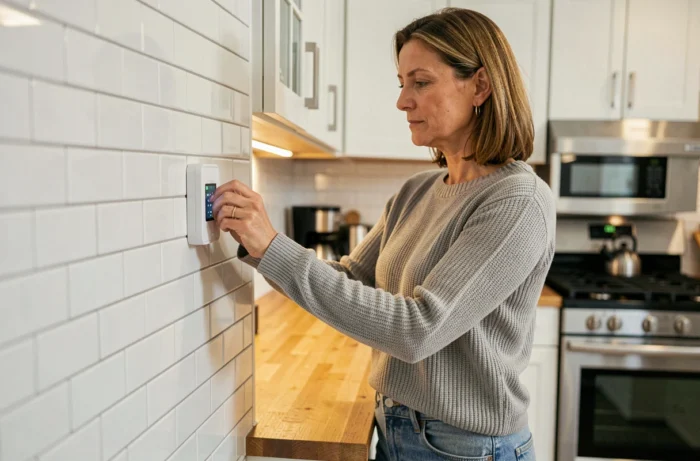
The pilot wire, present on most recent electric radiators, already allows for receiving commands (comfort, eco, frost protection, off) from a centralized programmer or a connected thermostat. Without a connected pilot wire, the radiator operates continuously at the manually chosen setting, without any modulation.
Connected thermostat or wired programmer
The connected thermostat offers remote programming and real-time adaptation to the measured temperature. The wired programmer, which is less expensive, is sufficient for fixed time slots. In both cases, the goal is the same: to heat a room only when it is occupied and to lower the setting as soon as it is empty.
We observe that the difference in consumption between room-by-room controlled heating and heating in permanent mode often represents the most significant area of savings in an all-electric home.

Thermodynamic water heater and CEE bonuses since September 2026
Since September 1, 2026, energy savings certificates (CEE) provide additional bonuses for controllable and decarbonized equipment. The thermodynamic water heater is among the first beneficiaries of this refocusing, alongside combined solar systems and hybrid equipment.
A thermodynamic water heater uses an integrated heat pump to heat sanitary water. Its electricity consumption is significantly lower than that of a traditional resistance tank. Coupled with an off-peak contactor, it concentrates its operation during the lowest tariff periods.
Technical criteria to check before replacement
- The volume of the installation room: the device extracts calories from the ambient air, so a sufficient volume (generally an unheated room of at least several cubic meters) is needed to avoid cooling a living space
- Noise level: the compressor emits a noise comparable to that of a refrigerator, which should be considered if the tank is near a bedroom
- Compatibility with the existing panel: a dedicated circuit in 2.5 mm² under a 20 A circuit breaker is necessary, which aligns with the segmentation principle mentioned earlier
The combination of CEE bonuses and off-peak control makes the return on investment faster than with a simple replacement by a new traditional electric tank.
Conversion coefficient of the DPE and impact on property value
A decree published in the summer of 2026 lowers the conversion factor of electricity in the calculation of the energy performance diagnosis (DPE). This coefficient, which converts final energy into primary energy, drops from 2.3 to 1.7 for electricity. In practice, an all-electric home sees its DPE class improve without any work, simply through recalculation.
This regulatory reassessment does not change actual consumption, but it alters the perceived value of the property at resale or rental. A property classified as E that moves to D exits the category of thermal sieves, lifting the progressive rental ban provided by the Climate Law.
Optimizing a home’s electricity is therefore not just about reducing consumed kilowatt-hours. The sizing of the panel, the choice of subscribed power, room-by-room control of heating, and replacing a traditional tank with a thermodynamic water heater form a coherent whole. The regulatory timeline, between the obligation for regulation in 2027-2030 and the new DPE coefficient, pushes in the same direction: to structure the installation rather than piling up eco-actions.