
Well-being in daily life is the subject of abundant recommendations: drink water, eat vegetables, sleep eight hours. Without indications of thresholds, duration, or frequency, these tips remain difficult to implement concretely. We will distinguish what produces measurable effects on health from what falls under marketing discourse, focusing on concrete physiological mechanisms.
Well-being tips without dosage: why they change nothing
The wellness market produces a large quantity of generic recommendations. “Stay hydrated,” “move,” “breathe”: these phrases circulate without ever specifying a threshold or context of application.
Their truthfulness is not in question. It is the absence of dosage, duration, and frequency that prevents any practical implementation. Telling someone to “move more” who does not know if twenty minutes of walking constitutes physical activity does not change their behavior.
We find this ambiguity around dietary supplements presented as universal solutions. A supplement can correct a deficiency documented by a blood test. Without prior diagnosis, it provides nothing measurable and risks masking the truly effective levers. To better understand these mechanisms, the health tips from Je Comprends Enfin detail the physiology behind each common recommendation.
Physical activity: real thresholds of effectiveness on stress and sleep

Sedentary behavior is an independent risk factor, distinct from lack of exercise. Sitting for long periods cancels out some of the benefits of a workout. Building an effective routine requires two parallel actions: adding activity sessions and breaking up periods of immobility.
The regularity of sessions combined with reducing uninterrupted sitting time produces the clearest results. Active breaks of a few minutes, interspersed within sedentary periods, affect blood sugar and blood pressure. A single daily session does not always compensate for those hours spent without moving.
Choose intensity based on the goal
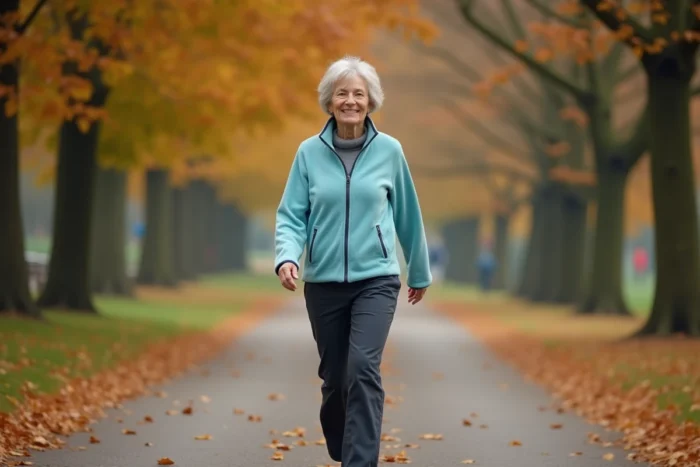
To reduce stress, moderate intensity activities are sufficient: brisk walking, cycling at a conversational pace. A simple guideline is to maintain an effort that still allows for conversation without marked breathlessness.
For sleep, the time of day matters as much as the type of exercise. An activity performed in the morning or early afternoon promotes falling asleep. The same session done late in the evening may delay deep sleep onset in some individuals.
- Interrupt every hour of sitting with a few minutes of movement, even light, to counteract the effects of prolonged sedentary behavior
- Prioritize regularity over intensity: four to five moderate sessions per week yield more results than a single intense session
- Adjust the timing to the intended goal (daytime energy versus sleep quality)
Daily sun protection: a health lever beyond summer
Sun protection remains confined to beauty sections or vacation guides. Recent data reposition it as a daily health issue, even outside the summer period.
Specialized recommendations remind us that shade and covering clothing are the first line of protection, before any sunscreen. Applying sunscreen to extend exposure cancels out the protective benefit: this is the most common mistake.
UV cabins should still be avoided. On this point, health recommendations have not changed. Sunscreen complements physical protections; it does not replace them.
Integrate sun protection into a health routine
Applying sunscreen on the face and hands is a low-cost, high-health-benefit daily gesture. The challenge lies in consistency: the benefit only exists if the application is renewed regularly and in sufficient quantity.
Mental health at work: the limits of individual relaxation advice
Psychological suffering related to work primarily stems from organization, not from personal capacity to breathe better. The national occupational health plan in force places the prevention of psychosocial risks at the center of employers’ obligations, far beyond individual stress management advice.
The Senate has conducted hearings on this topic. They confirm that collective levers (workload, decision-making autonomy, managerial support) weigh more heavily than personal relaxation techniques.
Individual practices are not without interest, however. Mindfulness or breathing exercises can reduce reactivity to acute stress. Presenting them as the main response shifts responsibility onto the employee rather than the work environment.
- Distinguish organizational factors (workload, pace, autonomy) from individual factors (stress management techniques) to avoid confusing symptom and cause
- Verify the existence of a prevention system compliant with the occupational health plan, including actions on actual working conditions
- Use listening and psychological support resources as a complement, not as a substitute for improving working conditions
Tracking apps (sleep, activity, diet) can provide useful data, provided they avoid hyper-quantification. The documented risk is that they encourage more consultation of dashboards than actual habit changes.
Breaking up sedentary behavior, timing physical activity appropriately, protecting the skin beyond summer, demanding working conditions that comply with prevention obligations: these are the dosages and consistency that produce results, not the accumulation of generic recommendations.